Formatting
#02
When to Indent
& When Not To
How, when, and why to use indents in your writing, based on standard fiction publishing conventions.

Hi friends.
This topic is a little boring but it’s something I come across in manuscripts, so let’s go over it.
The first line of a chapter or scene should not be indented.
It’s a small detail, but it does a lot of work for the reader.
Why Do We Indent?
In fiction, indentation serves two main purposes:
1. Readability
Indentation gives readers a visual cue that a new idea, action, or moment is starting.
2. Connectivity
Indented paragraphs signal that all the text within a scene belongs together—same setting, same narrative thread—just separated into smaller beats.
Think of it like creating visual rhythm on the page.
When Do You Indent?
A new paragraph signals a shift:
a new speaker
a new thought
a shift in focus or action
But as long as you’re within the same scene, every new paragraph is indented. That consistent indentation visually ties everything together, showing it is part of the same moment.
A helpful analogy:
Think of a textbook’s index.
Chapter titles sit flush with the margin.
Sections under that chapter are indented.
Subsections are indented further.
It creates a visual hierarchy. Fiction uses the same logic.
When Not to Indent
To show a larger break—a jump in time, place, POV shift, or scene change—the first line is set flush left, with no indent. This tells the reader we’re starting something new.
This applies whether you’re writing narrative or dialogue.
It also applies even if you use dropped caps, special fonts, or different line spacing.
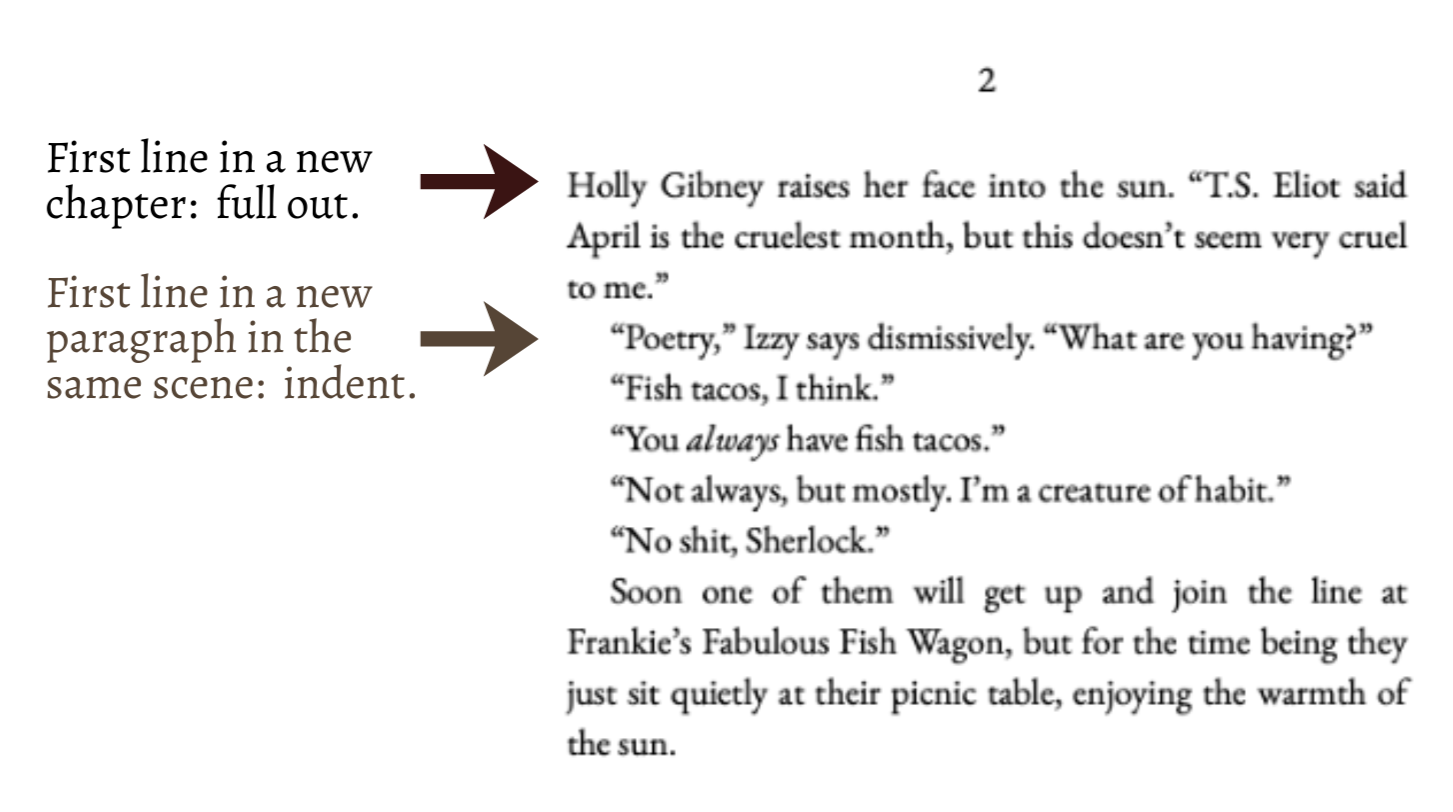
Visual Examples
(Stephen King, Never Flinch.)
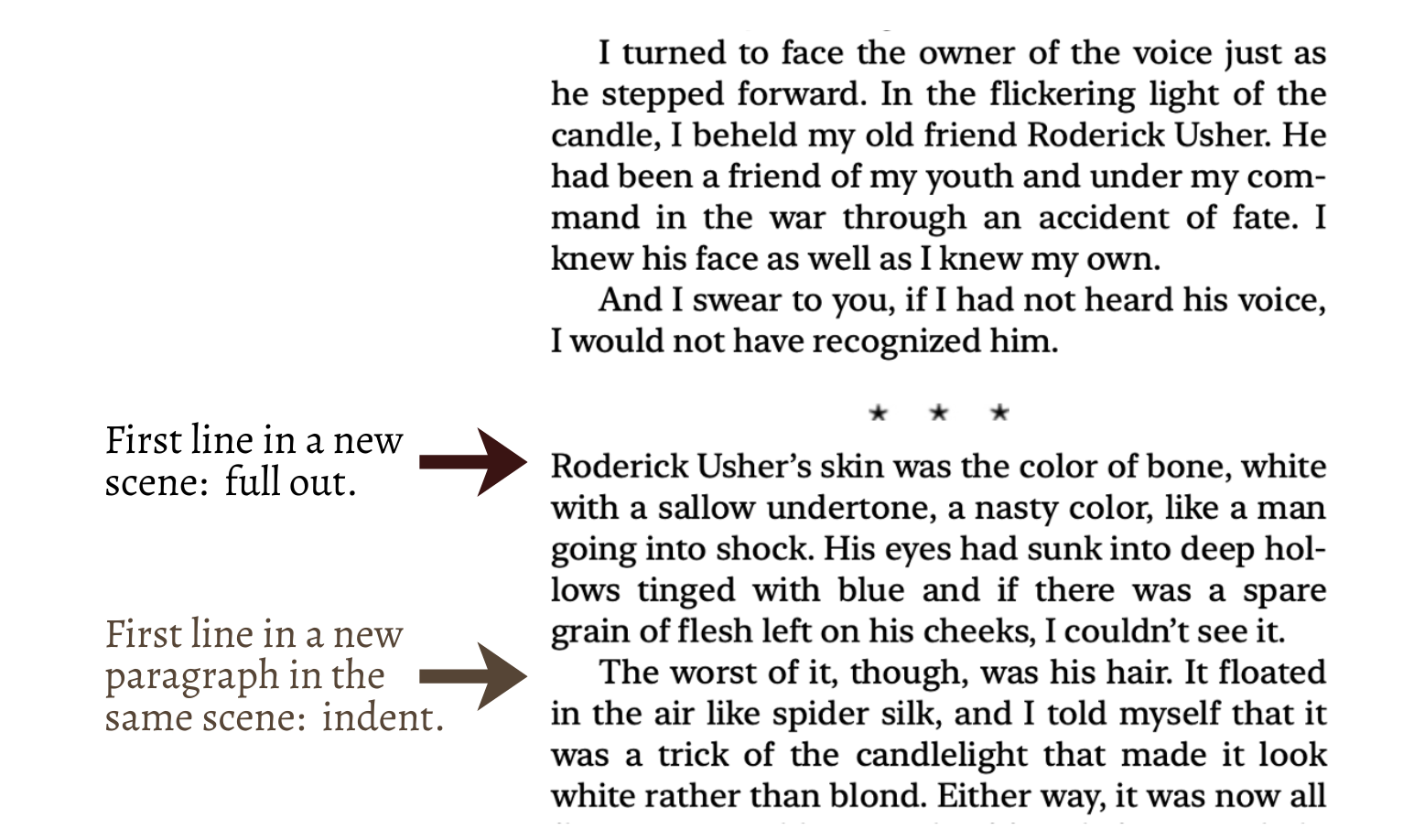
(T, Kingfisher, What Moves the Dead.)
Using Microsoft Word Styles
Explaining Styles step-by-step in text would a bit unhelpful, but if you want a clear walkthrough, Louise Harnby has an excellent, straightforward video on setting up and applying styles in Word. It’s a great way to ensure consistency throughout your manuscript and saves you time with incorporation universal changes.
You can always reach out if you’re unsure about an example in your manuscript, I’m happy to take a look. And if you’re working with me on a copyedit, this is one of those tiny-but-important things I automatically handle for you.
Happy formatting!
